
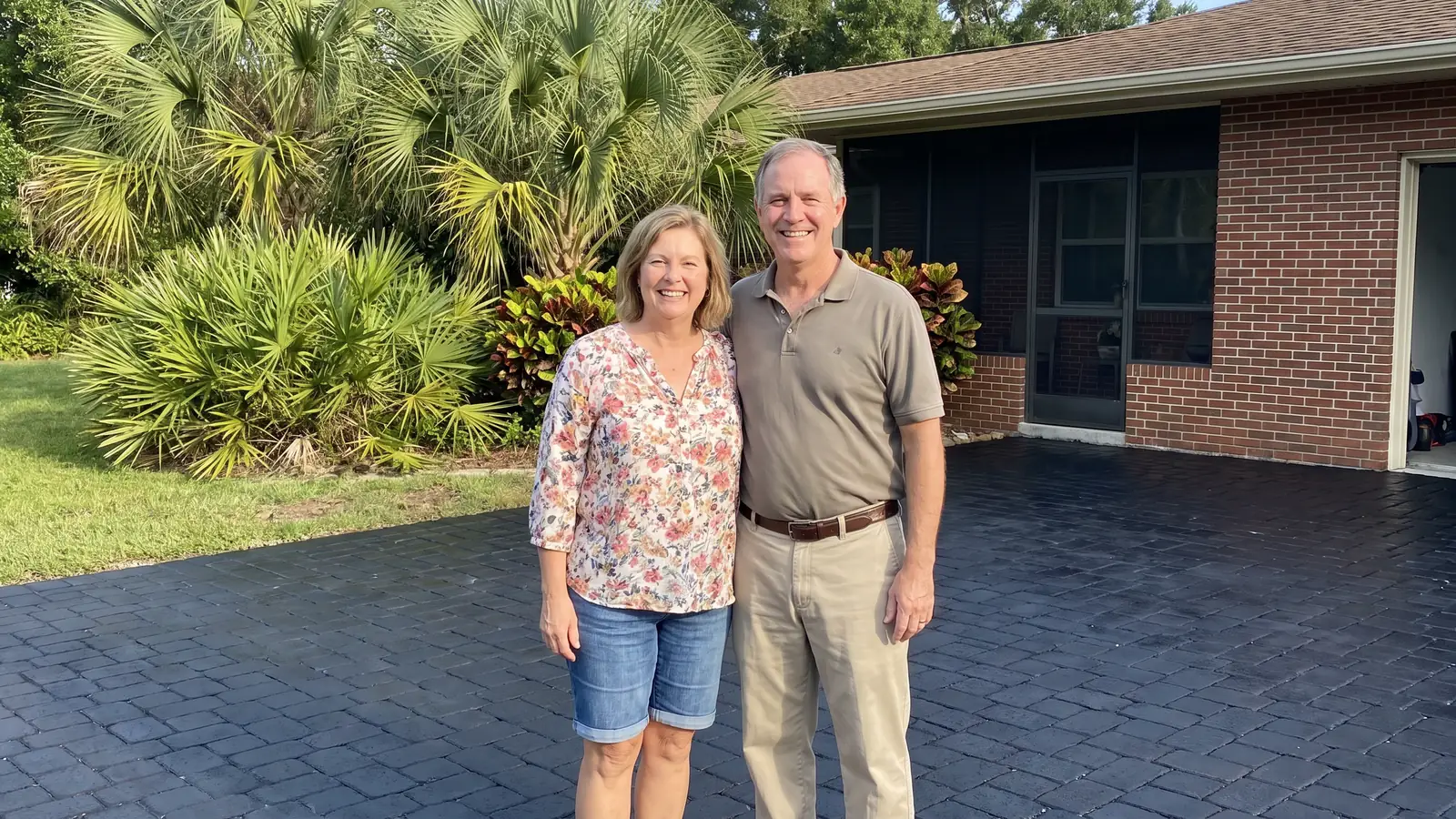
Paver sealing for San Jose homes
Paver Sealing in San Jose, FL
Big oaks and river air leave stains on San Jose pavers, so call (904) 479-2177 for a free paver sealing estimate.
- Brings out deeper paver color
- Fresh joint sand helps lock pavers in place
- Gives weeds less room to grow
- Makes the surface easier to keep clean
- Free estimate, no obligation
Request a Free Estimate
Free, no obligation.
Fast, careful paver sealing in San Jose
Paver sealing is available across San Jose, from the oak-lined streets near San Jose Boulevard to the quiet lanes off the river. A local contractor can clean, re-sand and seal your driveway, courtyard or garden walk, and the estimate carries no fee. Call (904) 479-2177, and a reply comes within 1 business day, usually in far less time.
Picture an entry court under a big oak, with black streaks on the pavers and acorn stains in the corners. A wash, new sand and a fresh coat bring back a clean, even color. If you would like to write first, you can ask for a free estimate.
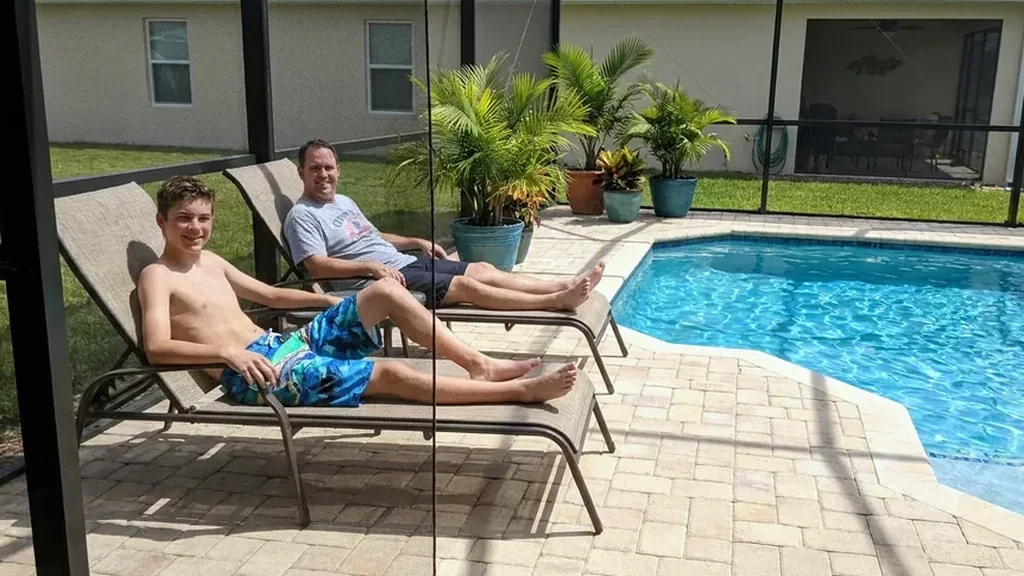
Why hire a local paver sealing contractor in San Jose?
San Jose homes sit under big oaks, near the river and beside older houses that need a gentle hand. A local contractor plans for all three, so ask for a free estimate to hear how that applies to your street.
A visit with no pressure
Someone looks at your San Jose pavers for free and gives a price before any work is agreed.
A range to measure against
Hold any San Jose quote next to the published regional figure of $1.75 to $3.25 per square foot.
A finish that suits the house
Matte sits quietly beside a Spanish Revival front, while a glossier look adds shine.
Care around old houses
Old stucco, wood trim and planting beds are rinsed around and covered where needed.
Get Your Free Estimate in San Jose
Tell us about your pavers in San Jose.
Free, no obligation
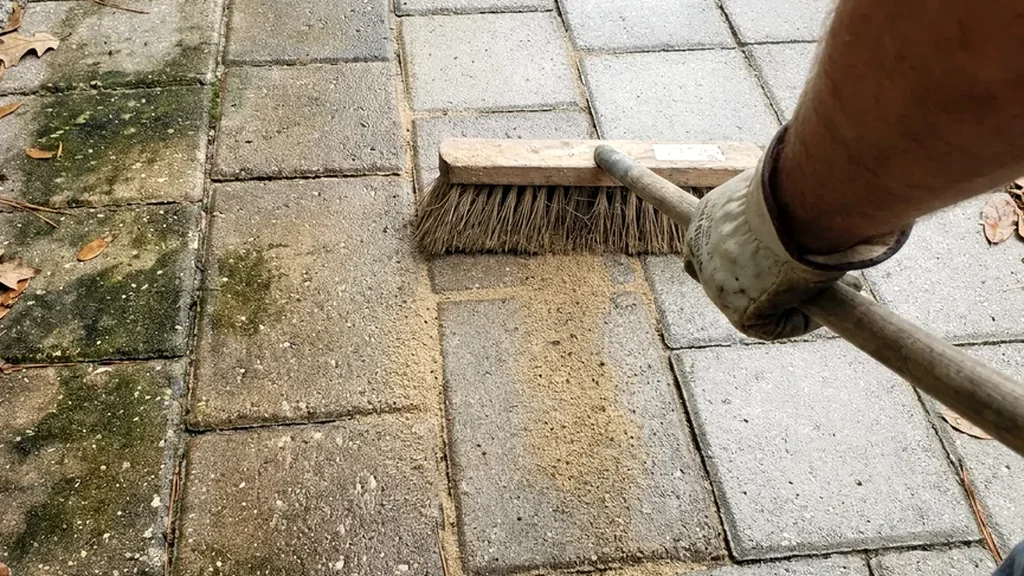
What paver problems show up most in San Jose?
Acorn and leaf stains under big oaks
UF/IFAS says live oaks reach 60 to 80 feet tall with a spread of 60 to 120 feet, and that water oak acorns can stain asphalt and concrete. Many San Jose streets are shaded by large oaks with draping moss. Under those trees, leaf tannin and acorn marks show up on light pavers. Sealing makes the next clean-up easier, since dirt grips a sealed surface less. Light tan and gray pavers show these marks most. Over time a sealed surface also tends to stay cleaner between washes, which helps on a shady entry court. The visit also covers any bare spots around planting beds, where soil washes onto the surface after rain and darkens the joints.
Green film in shade near the river
The St. Johns River at Jacksonville is an estuary with a strong tidal influence, so the air stays humid. A home guide says green algae grows in shade where there is moisture, such as under trees and patio roofs. San Jose courtyards and north-side walks stay damp. That is where the slick film forms, so the wash has to reach those spots. Humid river air also helps mildew spread across the pavers during summer. In the damp months a thin green layer can come back within weeks on an unsealed surface, so shaded spots get a longer wash. Black streaks are often mildew rather than dirt, and they come off with the right wash rather than with extra pressure.
Old pavers, old coats
San Jose was laid out in 1925, and in 1947 a builder bought most of it and re-platted the lots for post-war homes. Pavers here may have been added by many owners in many decades. An unknown old coat is likely, and water-based sealer cannot go over solvent-based sealer. The contractor checks what is down first. A peeling, flaking or cloudy old coat may call for stripping. Keep any receipt or note from earlier work, since it can speed the first visit. Many owners choose to keep the same finish as before, which makes the surface look even from one end to the other.
Roots and settling
Large oaks send roots under driveways and walks. Landscape trade guidance says lost joint sand widens joints and lets soil in, and a paver maker says a weak base is a leading cause of pavers sinking or shifting. Roots can heave a paver slightly. Raised or sunken spots are noted before sealing, because a coat keeps any dip it covers. A paver maker adds that poor slope can cause drainage trouble. A quick look after a storm shows which stones have shifted, and a photo helps the estimate. Edges beside a lawn or flower bed are the first to shift, so they get a firm check before any sand goes in.
Rust marks from sprinklers
UF/IFAS adds that irrigating with iron-heavy water can stain surfaces orange. If your San Jose lawn runs on a well, look for rust fans near the spray heads. Rust gets treated before the coat goes down, since sealer would trap it. Ask the contractor to point the spray away from the pavers. A brief test on a hidden corner shows how a rust treatment reacts before the full surface is done. Turning a sprinkler head a few degrees can stop a repeat mark from showing up after the job is done.
Which San Jose homes need extra care when sealing pavers?
Older homes near Via de la Reina and the old gatehouses need the most care. Six houses on Via de la Reina went onto the National Register of Historic Places in 1985, as part of San Jose Estates. A paver surface beside old stucco or wood trim calls for gentle rinsing, so call (904) 479-2177 and name your street.
Some San Jose homes may also fall under city historic rules. The City of Jacksonville requires a Certificate of Appropriateness for exterior work in local historic districts and on local landmarks, and its examples include driveways. Sealing is not named, so a quick question to city staff settles it. When you know, ask for a free estimate.
San Jose homes run from waterfront mansions to small wood-frame houses, in Spanish Revival, ranch and modern styles. Properties are larger near the river and smaller inland. Bigger lots usually mean bigger paver areas. Tell the contractor about your lot size when you call (904) 479-2177.
What does paver sealing cost in San Jose?
Published prices across Northeast Florida for a clean, re-sand and seal run $1.75 to $3.25 per square foot. The San Jose figure shifts with leaf stains, green film and any old coat. A failed coat has to be removed first, which adds cost. To learn what your pavers would need, ask for a free estimate and ask for a free look.
Larger lots near the river can mean larger paver areas and longer runs of hose. Courtyards with tight gates and steps can add prep time. A Jacksonville cost guide says gates, stairs and tight side yards add prep. Call (904) 479-2177 and tell the contractor about access.
| Paved area | Typical example | Clean, sand and seal |
|---|---|---|
| 300 sq ft | Small patio or walkway | $525 to $975 |
| 600 sq ft | Two car driveway | $1,050 to $1,950 |
| 1,000 sq ft | Large driveway or pool deck | $1,750 to $3,250 |
| 1,500 sq ft | Driveway plus pool deck | $2,625 to $4,875 |
Math based on the $1.75 to $3.25 per square foot that Northeast Florida paver companies publish. Your contractor sets the actual price after seeing the surface. Repairs, leveling and stripping failed sealer are usually extra.
How does a paver sealing job work in San Jose?
Look at the oaks and the surface
The contractor starts by seeing where tree cover sits over your San Jose pavers. Roots, raised edges and sunken spots are marked. Pavers that have dropped are reset first. Mention any past sealer, and point out walls, trim and plants that need cover. The visit usually takes less than an hour for a typical home. Gate codes, pets and parking are sorted out at this stage so the day runs without delay.
Wash the tannin and green film
Cleaning removes leaf stains, acorn marks and algae. Rust marks from sprinklers are treated separately. A gentle setting is used, since hard spray can pull sand out of the joints. The hose is aimed away from old stucco and wood. A soft brush handles tight spots near stucco and trim, where a wide spray would splash. Shrubs and flower beds along the walk are covered, and runoff is kept off the roots.
New sand after the wash
New sand goes in after the wash. Soil drifts into open joints, and weeds take root in it. The contractor sweeps the face clean so the coat bonds to the paver. Sand that matches the existing color keeps the surface even. A sweep of the surface before sealing leaves no loose grit under the coat. The joints are checked again after the first sweep, and any low spot gets a second pass of sand.
Wait for a dry surface
Sealer needs a dry surface. Humid river air and oak shade slow drying, so a courtyard may need extra time. Fall and winter can help, since Jacksonville's driest months run from November to April. The contractor moves the date rather than seal damp pavers. On a shaded court, plan on a full dry day before the sealer goes on. If dew or fog lingers, a midday start is common, and the contractor will explain the plan.
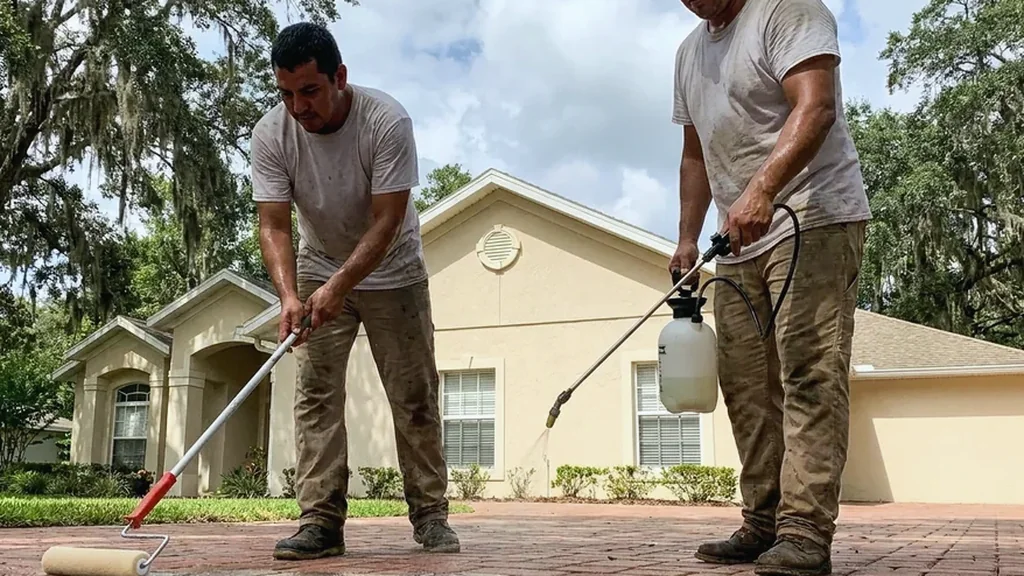
Apply the finish
The sealer goes on by spray, then a roller works it in, in whichever finish you picked. On an older home matte stays quiet, while a wet look deepens color and shows scuffs sooner. Feet can usually return in a few hours, and wheels wait about a day. Write down the product and the finish, so the next coat matches. The edges are checked for missed spots, and anything uneven is touched up before the crew leaves.
Complete paver services in San Jose
A San Jose job moves in order: wash, re-sand, dry, seal. Stains and algae go first. Sand follows, and the surface dries before any coat, so nothing is sealed in underneath. Ask how many hours each stage runs by calling (904) 479-2177.
Driveways, courtyards and garden walks wear in different ways. Drives take tires, courtyards take leaf fall and shade, and walks near the river stay damp. Pool decks add chlorine and bare feet. Say which of these you have when you ask for a free estimate.
Two sealer families exist, water-based and solvent-based, each in a matte or wet-look finish. An older coat may rule one of them out. On a Spanish Revival or older home, matte is a common pick. Keep the product name for the next coat, and call (904) 479-2177 to talk it through.
Weather sets the schedule. Summer brings quick, heavy storms, and the dry season runs from November to April. Shaded San Jose pavers dry slower than sunny ones. To find a window that fits your street, ask for a free estimate and ask about dates.
Questions to ask before you hire
- Do you test a small spot first to see how my pavers take the sealer?
- Can you protect my shrubs and the edge of the lawn while you spray?
- Do you charge more for steps, curved borders and pool coping?
- Who do I call if a patch looks uneven after the job?
- Will the sealed surface stay grippy when it is wet?
- Will you tell me which sealer goes on and how many square feet it covers?
- How long before cars can park on the driveway again?
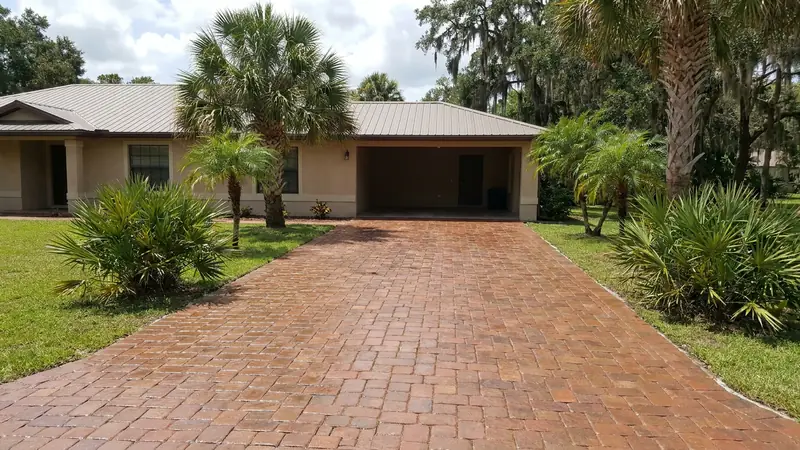
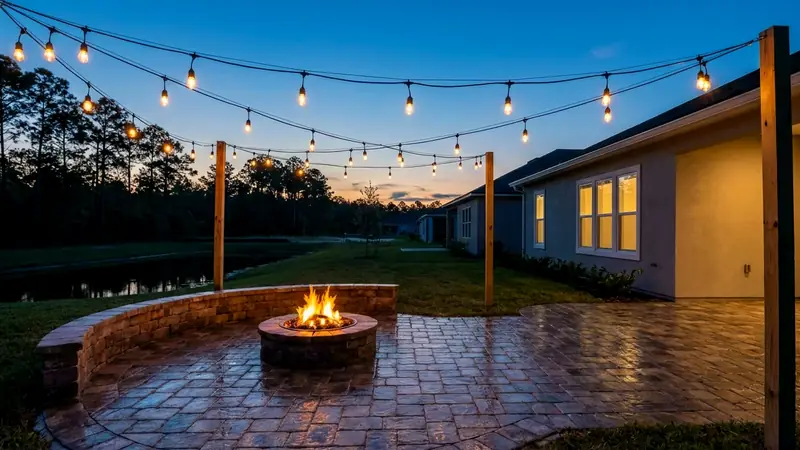
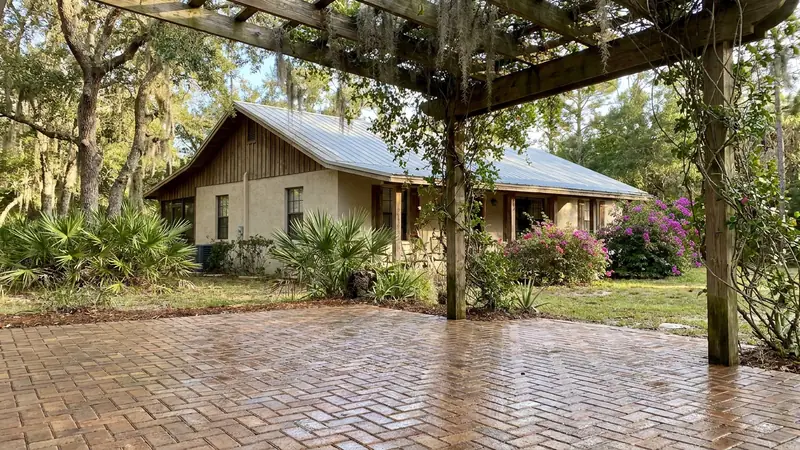
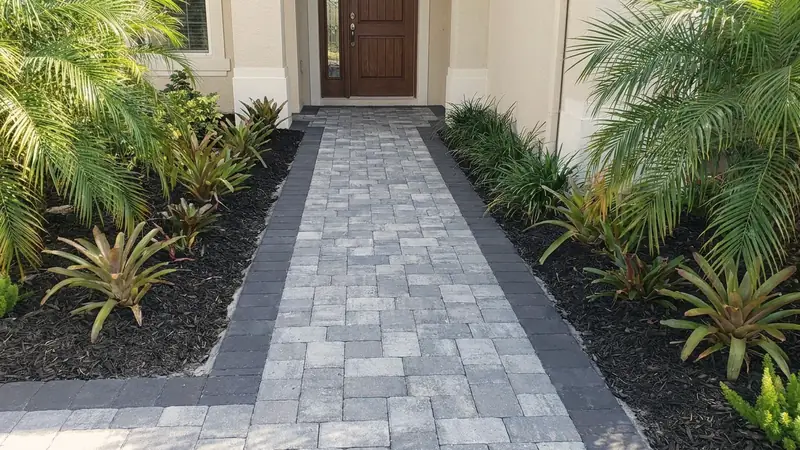
What do sealed pavers look like around San Jose?
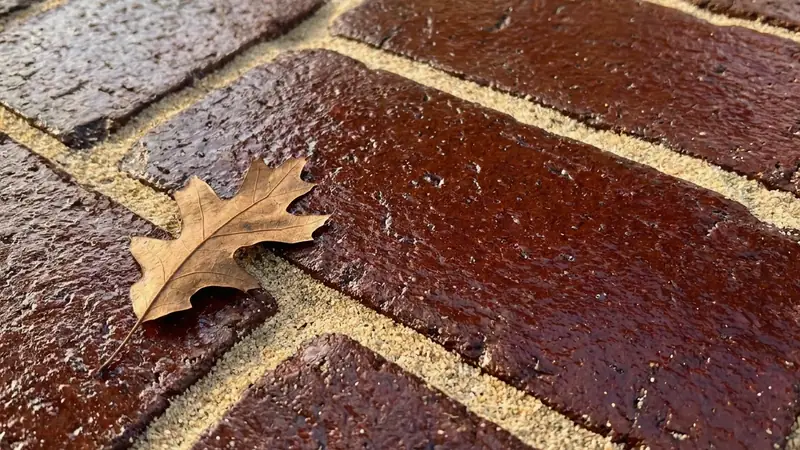
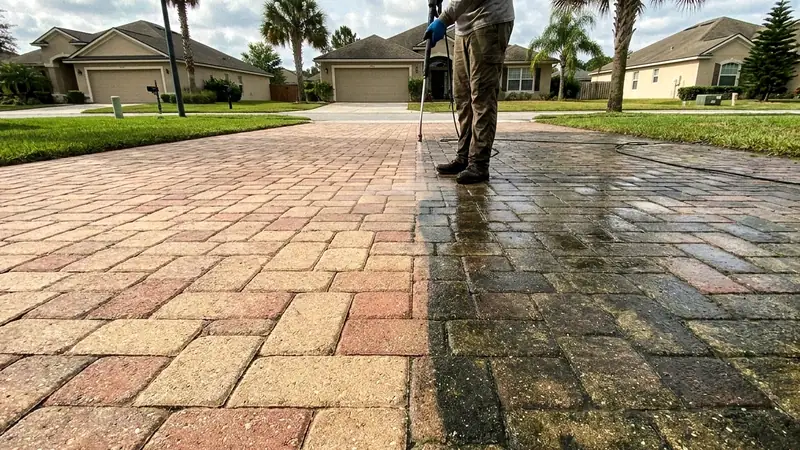
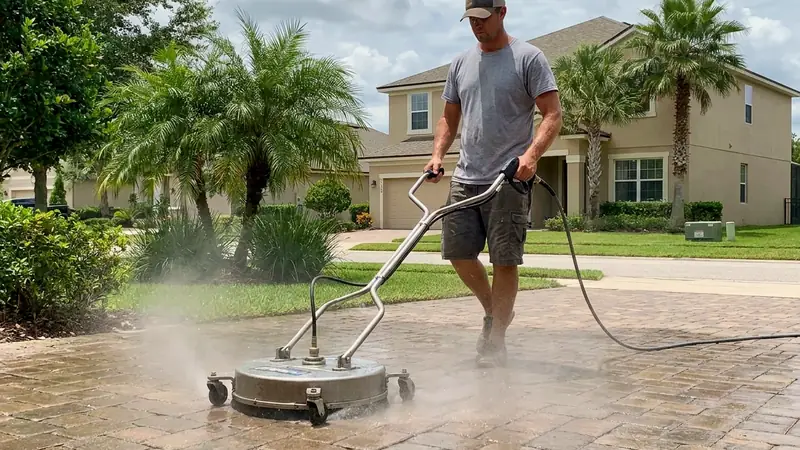
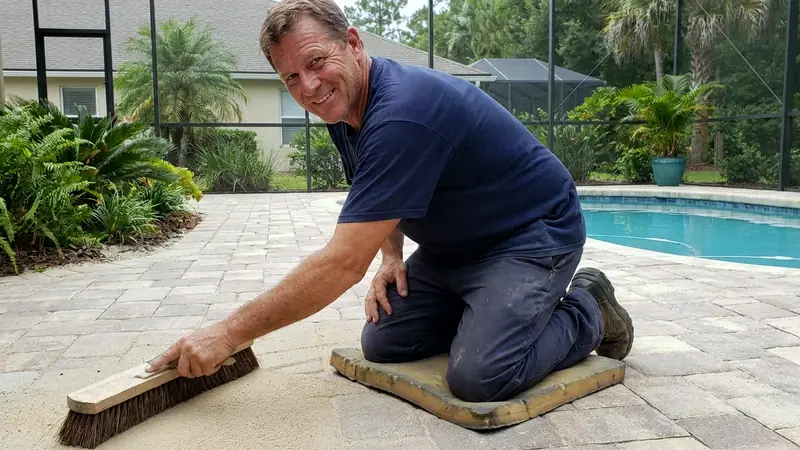
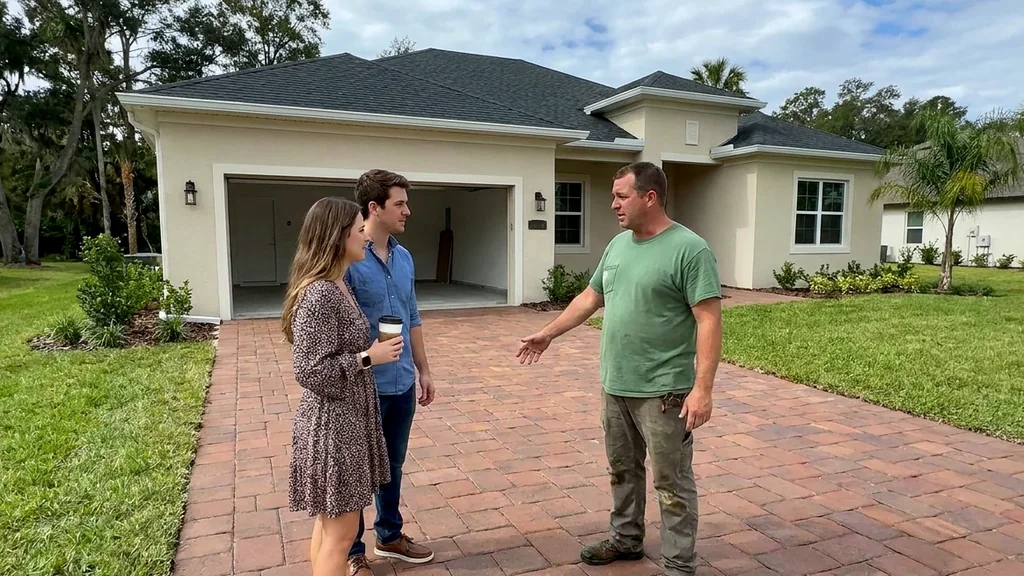
Why local matters in San Jose
A contractor who knows San Jose knows how oaks, humidity and older homes affect pavers. Shade, roots and leaf stains are routine here. That shapes the wash and the drying time. To speak with a contractor who works the San Jose side of the river, call (904) 479-2177.
Crews based nearby are used to the mix of homes here, from historic houses to 1950s ranches. They know which surfaces need a gentle hand. To have someone read an old coat for you, ask for a free estimate.
A local contractor also knows the layout. San Jose has radial streets in the northwest, gated lanes and river-edge lots. Planning for access saves trips. A few photos sent with your call to (904) 479-2177 help, and the estimate is free.
Why do San Jose streets carry Spanish city names?
San Jose was planned in 1925 by John Nolen, with a golf course by Donald Ross, and its streets carry the names of Spanish cities. The plan centered on Plaza del Sanchez and called for paved sidewalks on every street. The land boom crashed in 1926, and by then 37 structures stood. If you live on one of those streets, ask for a free estimate and say where.
The San Jose Hotel opened on New Year's Day 1926 and now serves as Bolles Hall at The Bolles School. Epping Forest, a 58-acre estate at Christopher Point, has a mansion from 1927. Goodbys Creek Preserve and Camp Tomahawk Park hold more green space. Close to any of these spots, call (904) 479-2177 and name your street.
Frequently Asked Questions
What is the average cost to seal pavers in San Jose?
The regional published range is $1.75 to $3.25 per square foot, covering the wash, the sand and the seal. Leaf stains, green film and old coats can push a job higher. Ask for the area to appear on the quote so bids line up.
Is a sealer coat a good idea for pavers in Florida?
Yes, for most yards. Sealer holds sand in place and helps keep leaf stains and oil on the surface. Under big oaks and near river humidity, pavers collect more grime. Plan to renew it every few years.
How much does it cost to seal outdoor pavers in San Jose?
The cost depends on size and condition. Small courtyards can cost more per foot than long drives, because setup time stays the same. A Jacksonville cost guide notes that smaller jobs run higher per square foot. A courtyard with steps and a gate can add prep time.
Do acorns and leaves stain pavers in San Jose?
They can. UF/IFAS says water oak acorns can stain asphalt and concrete, and leaf tannin marks light surfaces. A wash lifts many marks, and a sealed surface releases dirt more easily afterward. Moving the parking spot out from under the tree helps in fall.
Do I need city approval to seal pavers on a historic San Jose home?
It depends on your address. Jacksonville requires a Certificate of Appropriateness for exterior work in local historic districts and on local landmarks, including driveways. Sealing is not named, so ask city staff before work begins.
How long do paver sealers last in San Jose?
Spans of two to five years between coats are the norm in published quotes. Shaded walks tend to go longer than sunny drives. If water lies flat instead of beading, the coat is nearly gone.
Why is paver sealing so expensive?
Most of what you pay for is prep work rather than sealer. One Jacksonville company puts two to three hours of prep ahead of each hour of sealing. Time goes into washing, adding sand and drying, and into stripping any sealer that has failed.
Can pavers pushed up by oak roots be fixed before sealing?
Often yes. The contractor lifts the paver, adjusts the base sand and sets it level, though large roots may call for an arborist's advice. Sealing over a raised edge only keeps the problem.
How do I know my San Jose pavers need to be resealed?
Watch how water behaves. Try a splash test, which one Jacksonville company describes: beads mean the coat works, and a dark soaked patch means it is finished. Dull color and empty joints tell the same story.
Can pavers be sealed under a large oak in San Jose?
Yes, after they have been cleaned and have dried completely. Shade slows drying, so the contractor may wait for a clear stretch. Leaf fall right after sealing can stick to a fresh coat, so ask about timing.
Does sealing help with weeds in paver joints?
Yes. A regional paver company notes that a coat steadies joint sand, which reduces washout and weeds. Landscape guidance says lost sand lets soil into the joints, so joints are refilled before sealing.
How long should cars stay off a sealed San Jose driveway?
A Jacksonville company says to allow a few hours for feet and about a day for cars. Ask for the time that fits your product and the weather.
Ready for a Free Estimate in San Jose?
Call (904) 479-2177 and tell us about your pavers.
Free, no obligation