
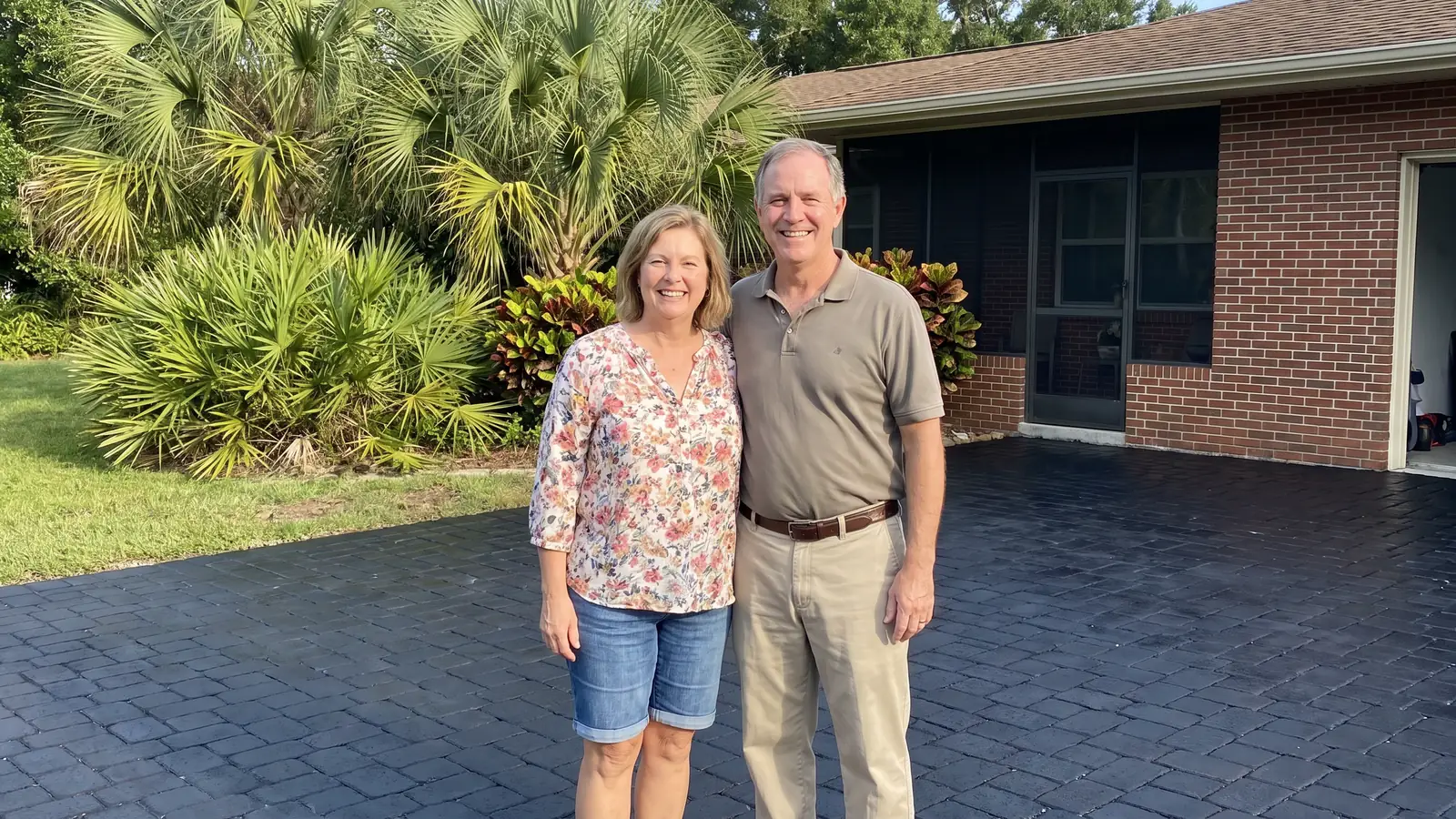
Brick pavers need the right sealer, not any sealer
Brick Paver Sealing in Highlands, FL
Call (904) 479-2177 for a free estimate on sealing the brick pavers at your Highlands home.
- Brings out deeper paver color
- Fresh joint sand helps lock pavers in place
- Gives weeds less room to grow
- Makes the surface easier to keep clean
- Free estimate, no obligation
Request a Free Estimate
Free, no obligation.
Can I get brick pavers sealed in Highlands, and when will someone call?
A local contractor sealing brick pavers can reach any Highlands address, and the first reply arrives within one business day, frequently within hours. The estimate is free, and you can decline it. Reach out by calling (904) 479-2177.
Brick pavers earn their place with rich color, so the goal is to keep that color without dulling it or clouding it. The right wash, the right sand and a sealer matched to the paver can do that. The wrong product can leave a milky film that is hard to fix. Say what your bricks are made of, or send a photo, when you ask for a free estimate.
Do brick pavers need sealing, or is that just a sales pitch?
The honest answer splits by material. Pine Hall Brick, a clay paver maker, says its pavers do not need sealing for strength or color, that the color is permanent and that some sealers can harm clay over time. Unilock, a concrete paver maker, says sealing is mostly about looks, and Angi says brick pavers can benefit from a coat that resists stains, fading and mildew. So sealing is a choice, not a rule. Tell the contractor your goals when you ask for a free estimate.
Both makers agree on one thing. If a sealer goes on, it must suit the paver, and Pine Hall Brick says it must be breathable. A clay paver seller adds that clay is porous by nature and that unsealed clay can take up oil and stains. A contractor who asks what you have before naming a product is a good sign. To get that conversation started, call (904) 479-2177.
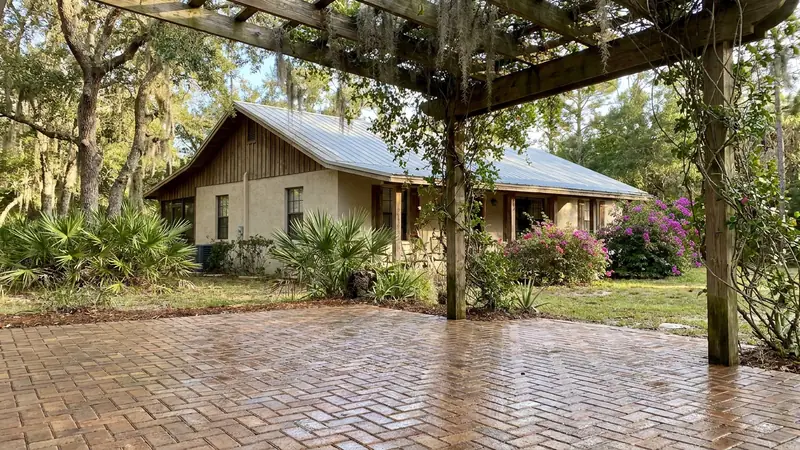
Does the estimate reach beyond Highlands to nearby towns?
Every town in the list has its own page, and a contractor covering Highlands can reach each of them. This page is written for homes in Highlands, ZIP 32218. Not seeing your street? Call (904) 479-2177.
How do I know whether my brick pavers are clay or concrete?
Why the material changes the plan
Clay pavers are fired and concrete pavers are cast, and they take sealer differently. A paving reference says a sealant recommended for one type is not necessarily right for clay pavers, and Unilock says a sealer designed for concrete may not be ideal for every stone or brick. Brick-look pavers can be concrete. A contractor can sort that out on the first visit, and the installer's paperwork helps too. Bring up any paperwork when you ask for a free estimate.
What the contractor tests first
A small hidden patch tells more than any guess. A clay paver seller says to test the sealer on one or two loose pavers first to preview the final color, and Unilock says to test in a small corner to avoid a whitish film. Wet look, satin and matte all show differently on brick. Ask for the test patch and look at it in full sun and shade. Call (904) 479-2177 to set one up.
Why can the wrong sealer turn brick pavers cloudy?
Trapped moisture is the usual cause. Unilock says a whitish film comes from moisture caught under the sealer, from too much product or from sealing over an older incompatible coat, and that residual moisture after washing leads to cloudy results. A clay paver seller says clay must be fully dry and that any trapped moisture may cloud the finish. A cost site adds that a water-based sealer is breathable and does not trap moisture, while a solvent-based one is not breathable and can leave a white haze. Ask which kind your contractor plans to use and why, and ask for a free estimate.
In a damp climate, drying time decides the job. The clay paver seller also asks for no rain, mist or irrigation for at least 24 hours around the work, and Unilock says shady spots need about a day to dry before sealing. A contractor who rushes that step is the one to question.
Can brick pavers be pressure washed in Highlands?
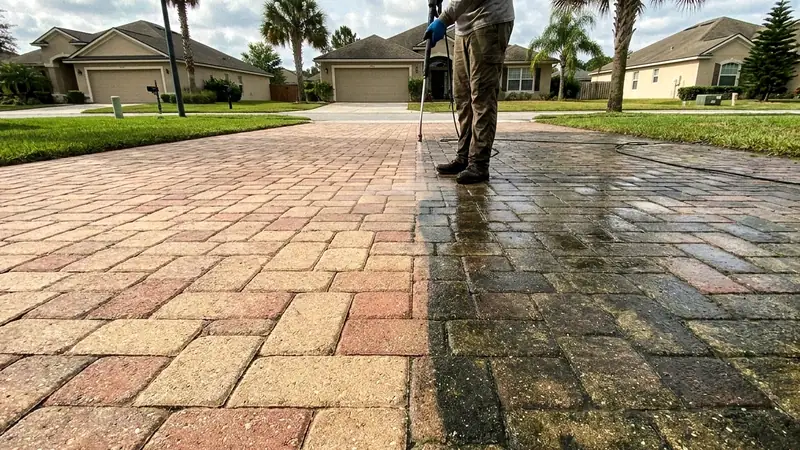
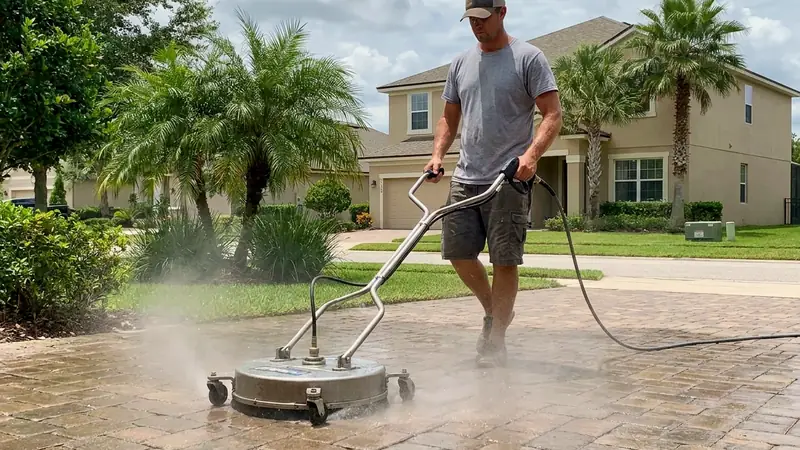
Only with care. Pine Hall Brick says a pressure washer tends to remove joint sand and weaken the interlock between pavers and can chip paver edges, and it suggests a stiff brush and a normal garden hose on sand-set clay. A clay paver seller does not recommend pressure washing sealed clay, because high pressure can damage the sealer, erode the joints and wear down the clay. Unilock says to use moderate pressure at a steady distance. A good contractor uses a surface cleaner and low pressure, then refills the joints. To ask about the method, call (904) 479-2177.
Pine Hall Brick also warns against muriatic acid, because acid strength varies and a stronger mix can cause more staining, and advises pre-testing any cleaner on a hidden spot and wetting the area first. Those are good questions to put to any bidder.
What does brick paver sealing cost in Highlands?
No page found prices brick on its own, so this table builds the number from published pieces: washing, sealing and the full bundle. A cost site that tracks contractor estimates lists washing at $0.35 to $0.80 per square foot. A Northeast Florida paver company lists cleaning from $0.22 and sealing from $1.90, and a Northeast Florida washing company lists $1.75 to $3.25 for the clean, sand and seal together. To get a figure for your own bricks, ask for a free estimate.
As an example, a 400 square foot patio at $1.75 to $3.25 would run about $700 to $1,300. Small jobs under 500 square feet cost more per foot, at $2.20 to $3.25 according to the cost site, and a minimum fee can matter on a small walk. Stripping a failed coat is priced after the old sealer is seen.
| Piece of the job | Published rate per sq ft | Where it comes from |
|---|---|---|
| Washing only | $0.35 to $0.80 | Cost site that tracks contractor estimates |
| Cleaning, starting rate | From $0.22 | Northeast Florida paver company |
| Sealing, starting rate | From $1.90 | Northeast Florida paver company |
| Clean, sand and seal together | $1.75 to $3.25 | Northeast Florida washing company |
| Clean, sand and seal, jobs under 500 sq ft | $2.20 to $3.25 | Cost site that tracks contractor estimates |
Rates are quoted from the pages named in the right column. They are not brick-specific prices, and the final figure comes once a contractor has seen the bricks. Repairs, leveling and stripping are normally extra.
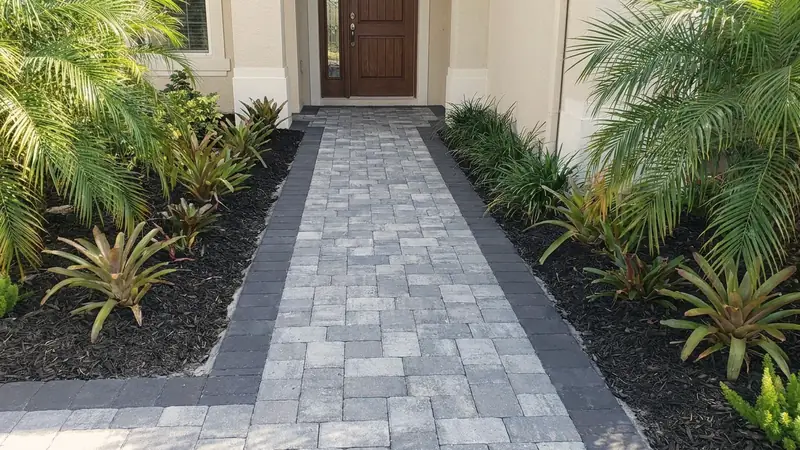
Why do brick pavers turn white or powdery in Highlands?
Efflorescence is a salt deposit that rises through the paver with moisture. Pine Hall Brick says the salt does not come from the paver itself and that rain clears it on a draining surface, and Unilock says new concrete pavers should wait two to three months, and sometimes a year, for it to fade before they are sealed. Sealing over the powder locks in a haze, so the surface is cleaned and allowed to dry first. Point out any white areas when you ask for a free estimate.
Pine Hall Brick adds that the crystals are superficial and do not affect durability. A cloudy film is different: it can come from old sealer, from over-application or from sealing damp pavers. A contractor can tell the two apart with a test spot. For a look at yours, call (904) 479-2177.
What do shade, moss and oaks do to brick pavers near the Trout River?
They add damp. The Trout River and its tributary the Ribault River run through this part of Duval County with wetlands near the water, and the regional climate record lists about 52 inches of rain a year with the heaviest downpours from May to September. A Northeast Florida washing company says moisture lingers on north and east sides and that live oaks leave tannin that stains concrete the color of tea. Pine Hall Brick says moss is a sign of poor drainage in a shaded area. Brick under trees keeps its moisture longer, so describe the shade when you ask for a free estimate.
Sealing does not cure a wet spot, and Unilock says so, but it can make mildew and stains easier to rinse. A contractor who sees a persistent green patch may suggest a drainage fix or trimming along with the coat.
Should brick paver joints get regular sand or polymeric sand?
That is a real fork. Pine Hall Brick does not recommend polymeric sand for most clay paver work, saying joints seal naturally in about six months, and that unswept residue can leave a cloudy haze. A Northeast Florida paver company says it skips polymeric sand in Florida because rain and humidity keep it from curing, and uses clean kiln dried sand with a joint-stabilizing sealer. Another contractor in Central Florida uses polymeric sand where suited. Ask what goes between your bricks and why. To discuss it, call (904) 479-2177.
How long does sealer last on brick pavers in Highlands?
Most coats last two to five years. Unilock and a cost site say three to five, a Northeast Florida paver company says two to five and a Northeast Florida washing company says two to three is typical. Pine Hall Brick, for its part, does not consider a sealer necessary for clay. Water that soaks in instead of beading means a fresh coat is due, according to a Northeast Florida paver company. To have yours checked, ask for a free estimate.
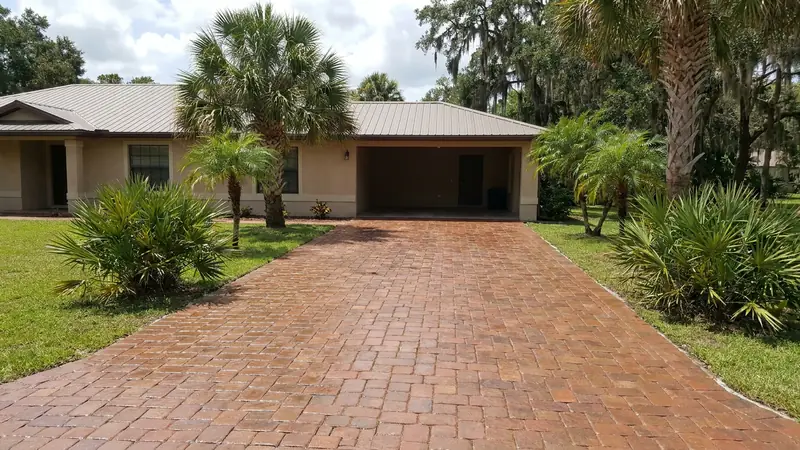
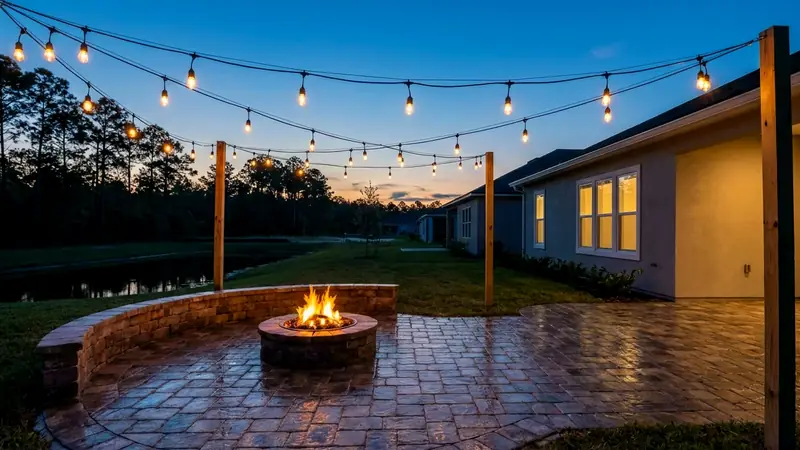
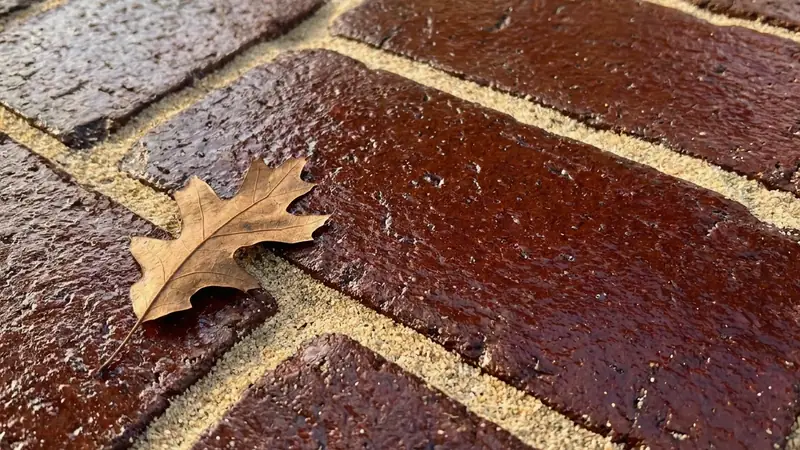
What do sealed brick paver areas look like around Highlands?
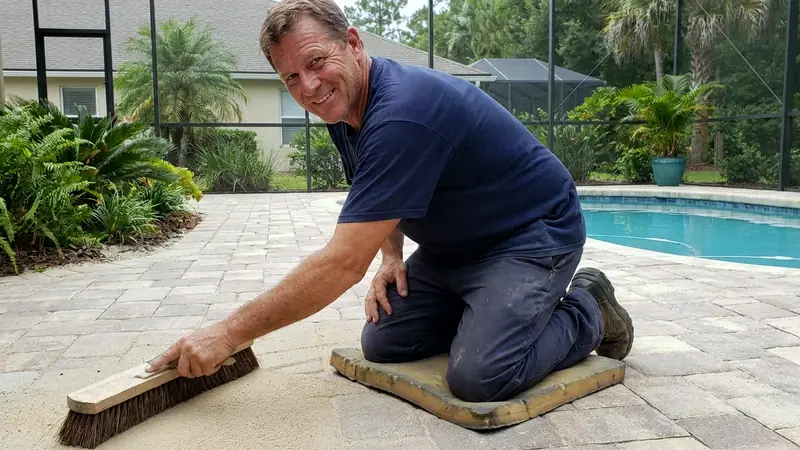
How does a brick paver sealing job run, step by step?
The order is built around testing and drying. For the sequence on your own bricks, call (904) 479-2177.
1. Identify the paver
The contractor works out whether the pavers are clay or concrete and checks the old coat.
2. Test a small spot
A sealer and a cleaner are tried on a hidden corner so color and finish are known in advance.
3. Wash gently
A surface cleaner at moderate pressure lifts mildew and dirt without stripping the joints.
4. Dry completely
Brick pavers sit until they are fully dry, with extra time in the shade.
5. Fill and seal
Kiln dried sand fills the joints, then a breathable or film sealer goes on, matched to the paver.
6. Review the finish
You check the color and sheen, and the contractor gives the cure time on the label.
Typical materials: kiln dried joint sand, a cleaner chosen for the stain and a sealer matched to clay or concrete. Typical equipment: a surface cleaner, a pump sprayer and a dry roller.
What do homeowners ask before sealing brick pavers?
These come from Google's lists for this search and from questions near Highlands. If yours is missing, call (904) 479-2177.
How much does it cost to seal pavers per square foot near Highlands?
One Northeast Florida washing company puts the whole clean, sand and seal at $1.75 to $3.25 per square foot, and a cost site that tracks contractor estimates lists $1.50 to $3.25. A Northeast Florida paver company lists sealing from $1.90 on its own. No page found gives a separate brick rate, so ask how brick is priced.
Is it good to seal pavers in Florida?
Unilock and Angi both say sealing helps pavers resist stains, fading and mildew, and Angi names brick pavers among the types that benefit. A clay paver maker disagrees for its own product. Which advice applies depends on whether your bricks are clay or concrete.
Why is paver sealing so expensive?
Washing, drying, joint sand and labor cost more than the product. Angi puts a gallon near $30 for about 250 square feet. A cost site also lists extra labor for moving furniture and minimum fees on small jobs, and a Northeast Florida washing company calls empty joints a two day job.
Can I pressure wash brick pavers?
Gently at most. Pine Hall Brick, a clay paver maker, says a pressure washer strips joint sand and can chip paver edges, and a clay paver seller advises against pressure washing sealed clay at all. Unilock says to hold moderate pressure so the sand stays put.
Do clay brick pavers need sealer?
Not for strength or color, according to Pine Hall Brick, which says clay paver color is permanent and some sealers can harm the pavers over time. It adds that any sealer used should be breathable. Some owners seal for stain resistance or a deeper look, and that choice is yours.
Will sealer change the color of my brick pavers?
It can. A Northeast Florida paver company says wet look sealer enriches and deepens color while matte keeps the natural look, and a clay paver seller says different sealers enrich clay by different amounts. Test on a few spare or hidden pavers first.
What is the white powder on my brick pavers?
Probably efflorescence, a salt deposit. Pine Hall Brick says the salt does not come from the paver itself, rain often clears it on a draining surface and dry brushing followed by a flush of clean water removes the rest. Unilock says to wait it out before sealing.
Can a sealer made for concrete pavers go on clay brick?
Not safely without checking. A paving reference says a sealant right for one paving type is not necessarily right for clay pavers, and Unilock says a sealer designed for concrete may not suit all stone or brick. Ask the contractor to name the product and match it to your paver.
How long should brick pavers dry before sealing?
Fully dry, and longer in shade. Unilock says sunny pavers can be ready in a few hours and shady spots need about 24, and a clay paver seller says any trapped moisture can cloud the finish. A cost site says solvent products need one to two days after washing.
Does sealer stop moss on brick pavers?
It slows it, but drainage is the root issue. Pine Hall Brick says moss points to poor drainage in a shaded area, and Unilock says sealer will not repair drainage problems. Sealing helps with mildew and stains, and a contractor can tell you whether water is the cause.
How long does sealer last on brick pavers?
Plan on two to five years. Unilock and a cost site say three to five, and a Northeast Florida paver company says two to five. Shade, trees overhead, sun and storms move you toward one end of that range.
Which other paver services can go with the bricks?
A driveway, pool deck or patio next to the bricks can be quoted on the same visit. Pick a page, or call (904) 479-2177.
Looking for a straight answer on sealing your brick pavers in Highlands?
Call or send the short form, and a local contractor will reply within a business day, often sooner.
Free, no obligation